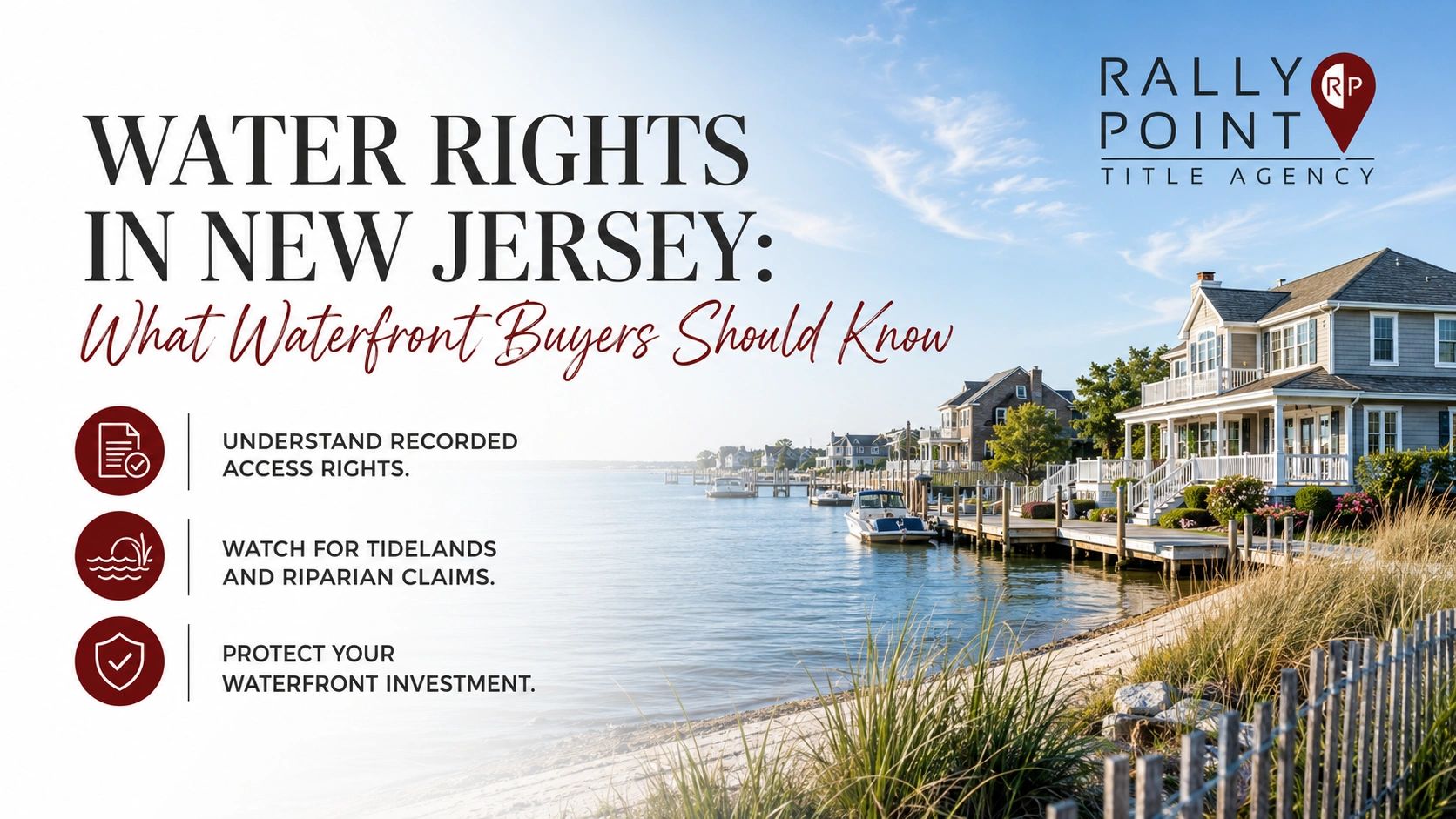
Buying a waterfront property in New Jersey can mean waking up to ocean views, enjoying direct bay access, or living beside a peaceful lake or river. However, owning property near water may also involve legal rights, restrictions, easements, permits, and title concerns that are not immediately visible during a showing.
Whether a home is located along the Jersey Shore, beside a tidal creek, near a lake, or on property served by a shared well, buyers should understand how water rights in New Jersey may affect the ownership, use, maintenance, and future development of the property.
What Are Water Rights?
Water rights generally refer to the legal rights and restrictions associated with accessing, using, crossing, draining onto, or developing property near water.
For New Jersey real estate, these issues may involve:
- Tidelands or riparian claims
- Waterfront-access easements
- Dock, pier, or bulkhead rights
- Drainage easements
- Shared-well agreements
- Public-access requirements
- Coastal-development restrictions
- Rights belonging to neighboring property owners
- Boundaries affected by tidal waters
These rights may be found in deeds, easements, surveys, permits, declarations, agreements, or other public records connected to the property.
What Are New Jersey Tidelands?
One of the most important considerations for waterfront property in New Jersey is the possibility of a Tidelands Claim.
The State of New Jersey defines tidelands as lands currently or formerly flowed by the mean high tide of a natural waterway. This can include property along oceans, bays, rivers, tidal streams, and other waterways affected by the tide.
A property does not necessarily need to appear directly underwater today to be affected. Land that was historically flowed by the tide and later filled may still be subject to a state claim.
The New Jersey Department of Environmental Protection’s Tidelands Program explains that a riparian grant may be used to clear title to property encumbered by a Tidelands Claim. NJDEP currently generally issues grants for filled tidelands rather than land that remains flowed by the tide.
For a buyer, an unresolved Tidelands Claim may create questions concerning:
- The extent of the property being transferred
- The owner’s rights to use part of the land
- Existing or proposed waterfront improvements
- Future financing or resale
- Whether a grant, lease, license, or other state instrument exists
This is one reason a detailed title search is particularly important when purchasing waterfront real estate in New Jersey.
What Is a Riparian Grant?
A riparian grant, also called a Tidelands grant, is a deed through which the State of New Jersey conveys its interest in certain tidelands.
Riparian instruments can include grants, leases, and licenses. The appropriate instrument may depend on whether the affected land is currently underwater, was previously flowed by the tide, or is being used for a waterfront structure.
For example, NJDEP explains that a riparian grant may be relevant to filled tidelands, while a license or lease may apply to certain uses of currently flowed state-owned lands. Property owners can learn more through the state’s Tidelands eServices portal.
A title review may identify whether a recorded riparian instrument already exists and whether it contains continuing obligations, boundaries, conditions, or fees.
Can Another Person Have Access Rights to Waterfront Property?
Yes. A waterfront home may be subject to an easement allowing another person, neighboring owner, community association, municipality, or utility to use part of the property.
Possible examples include:
- A path providing access to a beach, lake, or dock
- A shared driveway leading to the waterfront
- An easement for launching or storing boats
- Shared access to a pier
- Drainage rights across the land
- Utility access near the shoreline
- Community beach or lake rights
An easement may remain attached to the property even after it is sold. That means a buyer could acquire the property subject to another party’s continuing legal right to use a designated area.
A title search can help locate recorded easements, but buyers should also review the property survey and physically compare it with fences, paths, docks, driveways, and other visible features.
Does Owning Waterfront Property Include the Water?
Not automatically.
A deed describing a property as waterfront does not necessarily mean the owner has unrestricted control over the adjoining water, beach, tidal area, or submerged land. Ownership boundaries and usage rights may depend on the deed, survey, state claims, recorded easements, permits, and applicable law.
This distinction can be especially important for properties along:
- The Atlantic Ocean
- Raritan Bay
- Barnegat Bay
- Delaware Bay
- Tidal rivers and creeks
- Private lakes
- Community lakes
- Lagoons and canals
Buyers should avoid assuming that a dock, beach path, bulkhead, or shoreline area is included simply because it appears to be used exclusively by the current owner.
Docks, Piers and Bulkheads May Require Additional Review
Waterfront improvements frequently involve more than ordinary municipal approvals.
NJDEP states that coastal construction often requires authorization under New Jersey’s coastal rules. Its Coastal Zone guidance explains that permits are required in many circumstances before construction occurs in regulated coastal areas.
A buyer considering a New Jersey waterfront home should ask whether existing docks, piers, boat lifts, bulkheads, ramps, or similar improvements were properly approved.
The state provides separate guidance regarding the construction of docks and piers and notes that waterfront projects may also involve Tidelands instruments.
Relevant questions may include:
- Was the structure legally constructed?
- Does the permit transfer to a new owner?
- Is the structure within the deeded property?
- Is it covered by a riparian grant, lease, or license?
- Are repairs or replacement subject to new approvals?
- Is there a maintenance agreement with another owner?
A title company does not determine whether every physical improvement complies with environmental or municipal law, but the title process can reveal recorded documents that help buyers and their attorneys identify questions requiring further investigation.
Public Waterfront Access in New Jersey
Some waterfront locations may also be affected by public-access requirements.
Public access does not necessarily mean that the general public can walk across every privately owned waterfront parcel. However, access obligations may arise from coastal permits, municipal waterfront-access plans, recorded easements, development approvals, or other requirements.
NJDEP maintains a dedicated Public Access to the Waterfront program and provides information concerning coastal public access and municipal planning.
Buyers purchasing property in a shore town, marina community, condominium development, or other waterfront project should review whether any public or community access rights affect the property.
What About Properties With Shared Wells?
Water-related property rights are not limited to waterfront homes.
A rural or suburban property may receive water from a well located on another parcel or share a well with one or more neighboring properties. A recorded shared-well agreement may address:
- Which properties may use the well
- Responsibility for repairs and replacement
- Electricity and maintenance expenses
- Water-testing obligations
- Access to the well and related equipment
- What happens if the well fails
- Whether additional properties may connect
New Jersey’s Private Well Testing Act establishes testing requirements associated with certain real-estate transfers involving private wells.
Buyers should review both the water-quality documentation and any recorded agreement governing ownership, access, or maintenance of a shared system.
Flood Zones Are Different From Water Rights
Flood risk and water rights are related considerations, but they are not the same.
A flood zone concerns the likelihood and regulation of flooding. Water rights concern legal ownership, access, use, and restrictions involving the water or waterfront property.
A property can be affected by one, both, or neither.
Buyers can search current flood-map information through the FEMA Flood Map Service Center. FEMA recommends using the property address to locate the available Flood Insurance Rate Map and assess mapped flood risk.
Flood-zone information may affect insurance, lending, construction, elevation requirements, and future property expenses, while easements and Tidelands Claims may affect title and property use.
How a New Jersey Title Search Can Help
A New Jersey title search reviews the public record to determine how ownership is held and identify recorded matters affecting the property.
For a waterfront or water-adjacent home, the search may uncover:
- Recorded easements
- Tidelands or riparian instruments
- Restrictions and covenants
- Access agreements
- Shared-well agreements
- Legal descriptions and boundary references
- Prior deeds
- Mortgages, judgments, or liens
- Recorded rights belonging to other parties
The results allow the buyer, attorney, lender, surveyor, and other professionals involved in the transaction to evaluate concerns before closing.
Owner’s title insurance may also protect the buyer against certain covered title defects, subject to the policy’s terms, conditions, exclusions, and exceptions.
Questions to Ask Before Buying Waterfront Property in New Jersey
Before purchasing a waterfront home, buyers should consider asking:
- Is any part of the property subject to a New Jersey Tidelands Claim?
- Is there a recorded riparian grant, lease, or license?
- Does anyone else have a right to cross or use the property?
- Are the dock, pier, boat lift, or bulkhead properly permitted?
- Does the latest survey match the current shoreline improvements?
- Are there community or public-access requirements?
- Is the property located in a regulated coastal or flood-hazard area?
- Are there shared maintenance obligations?
- Does a neighboring property have drainage or water-access rights?
- Are any shared-well rights or responsibilities documented?
Because every property is different, buyers should discuss property-specific legal questions with their New Jersey real-estate attorney.
Protecting Your New Jersey Waterfront Investment
A New Jersey waterfront home may offer a lifestyle that is difficult to match—but the view is only one part of the purchase.
Recorded water rights, access easements, Tidelands Claims, coastal permits, shared systems, and development restrictions can affect how a property is owned, used, maintained, renovated, and eventually sold.
Ordering title work early gives the parties more time to identify questions, review recorded documents, and address potential concerns before closing day.
At Rally Point Title Agency, we help buyers, sellers, lenders, attorneys, and real-estate professionals navigate the New Jersey title and closing process with clarity and confidence.
Contact Rally Point Title Agency
📍 Matawan, New Jersey 📞 732-359-2009 ✉️ Title@[RallyPointTitle.com]() 🌐 RallyPointTitle.com
This article is provided for general informational purposes only and does not constitute legal, environmental, surveying, insurance, or tax advice. Property-specific questions should be directed to the appropriate licensed professional.