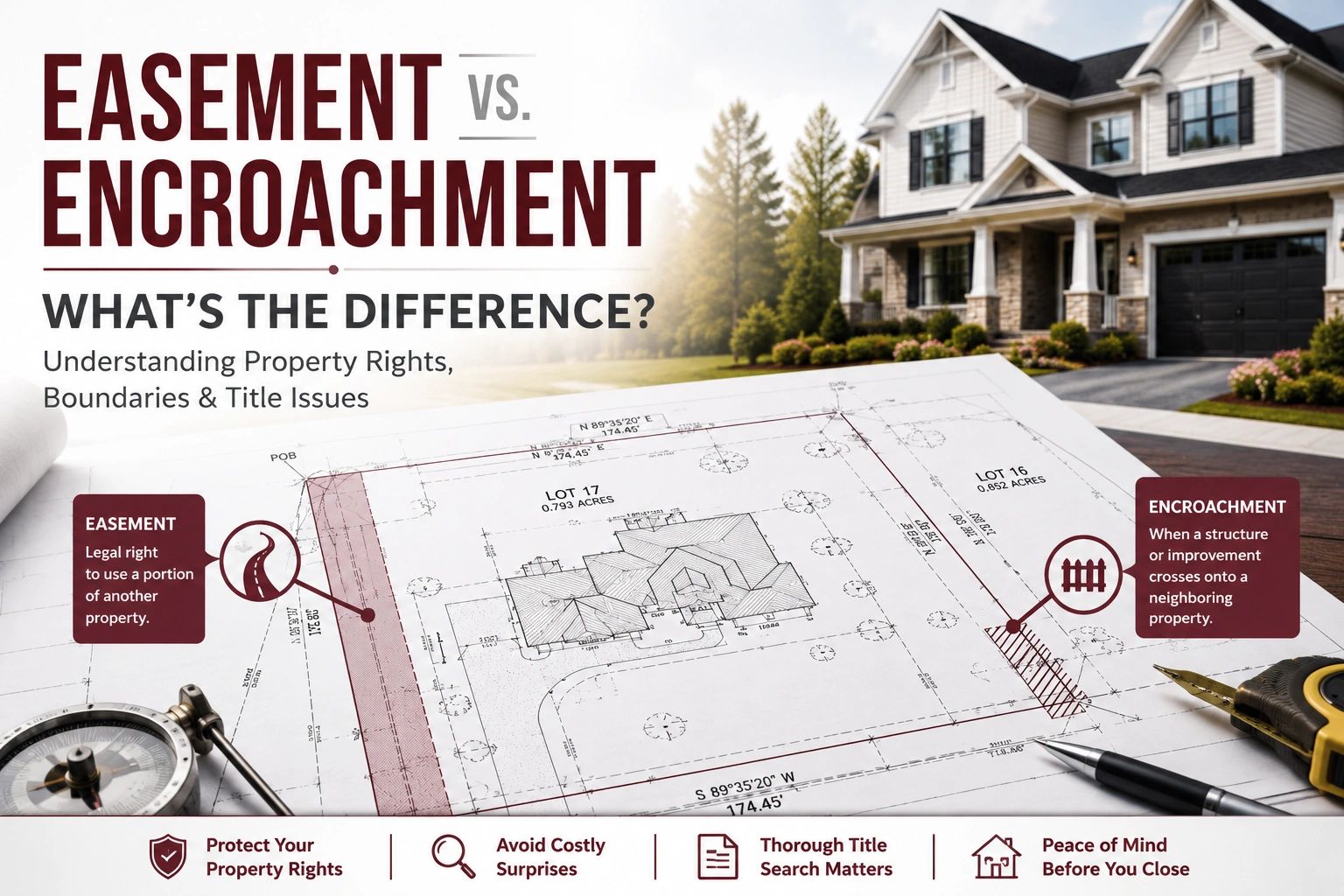
If you're buying, selling, or refinancing a property in Matawan, NJ, understanding property boundaries is an important part of protecting your investment. During a real estate transaction, terms like easement and encroachment may appear in title documents, surveys, or discussions with your attorney, lender, or title company.
While these terms are sometimes used interchangeably, they mean very different things and can impact your property rights, future improvements, and even the ability to sell your home.
At Rally Point Title Agency, a Matawan NJ title company serving clients throughout Monmouth County and beyond, we help buyers, sellers, lenders, and real estate professionals navigate these issues every day. Learn more about our title services at https://rallypointtitle.com.
What Is an Easement?
An easement is a legal right that allows someone else to use a portion of your property for a specific purpose.
Even though you still own the property, another party may have the right to access or use part of it.
Common examples include:
- Utility easements for electric, gas, water, or cable companies.
- Shared driveways between neighboring properties.
- Drainage easements.
- Access easements for landlocked properties.
- Conservation easements.
For example, a utility company may have the legal right to access underground lines running across your property. This does not mean they own the land, but they have a recognized legal interest in using it for a specific purpose.
Property owners can learn more about easements and land use through the New Jersey Department of Environmental Protection at https://www.nj.gov/dep.
Many easements are recorded in public records and are often discovered during a title search performed before closing.
What Is an Encroachment?
An encroachment occurs when a structure or improvement extends beyond a property's legal boundary and onto neighboring land.
Examples of encroachments include:
- A fence built over the property line.
- A shed partially located on a neighboring property.
- A driveway crossing onto an adjacent parcel.
- Retaining walls built beyond the boundary line.
- Landscaping improvements extending onto neighboring property.
Unlike an easement, an encroachment is generally not an agreed-upon legal right. Instead, it is typically a property boundary issue that may require correction or resolution between property owners.
Many encroachments are discovered through a professional property survey.
Easement vs. Encroachment: What's the Difference?
The simplest way to understand the difference is:
An easement is usually authorized.
An encroachment is usually unauthorized.
An easement grants someone a legal right to use part of a property.
An encroachment occurs when a structure or improvement crosses a property boundary without permission or legal authorization.
Both situations can affect ownership rights, future construction projects, financing, and real estate transactions.
Why Property Surveys Matter in Matawan, NJ
Property surveys are one of the best tools for identifying potential boundary concerns before they become larger issues.
A survey can help identify:
- Easements affecting the property.
- Boundary line discrepancies.
- Encroachments.
- Access concerns.
- Property improvements near lot lines.
- Potential title issues.
Many homeowners assume that fences, landscaping, and driveways are located within property boundaries simply because they've existed for years. However, that's not always the case.
A survey provides a visual representation of property lines and can help uncover issues before closing.
The New Jersey Society of Professional Land Surveyors provides additional information about surveys and boundary issues at https://www.njspls.org.
How Easements and Encroachments Affect Home Buyers
For buyers throughout Matawan, Aberdeen, Holmdel, Marlboro, Colts Neck, Middletown, Red Bank, and the surrounding Monmouth County area, understanding these issues before closing is essential.
A recorded easement could impact:
- Where you build a pool.
- Future home additions.
- Fence placement.
- Shed installation.
- Landscaping plans.
An encroachment could create questions about ownership rights, neighbor disputes, or future property improvements.
This is why many buyers rely on experienced real estate professionals, attorneys, surveyors, and title companies during the closing process.
The National Association of REALTORS® offers additional homeownership resources at https://www.nar.realtor.
How a Title Search Helps Protect Property Owners
A title search is designed to uncover matters that may affect ownership rights and the transfer of property.
A thorough title examination may reveal:
- Easements.
- Restrictions.
- Prior liens.
- Judgments.
- Ownership concerns.
- Recorded agreements affecting the property.
At Rally Point Title Agency, we conduct detailed title examinations to help identify potential issues before closing.
As a trusted Matawan NJ title company, we proudly assist buyers, sellers, investors, attorneys, and lenders throughout New Jersey, New York, Pennsylvania, and Florida.
Learn more about our title insurance and closing services at https://rallypointtitle.com.
Property Records and Public Information
Many easements are recorded in public land records.
Property owners interested in researching their property can access Monmouth County property information through the Monmouth County Open Public Records Search system at https://oprs.co.monmouth.nj.us/oprs.
Reviewing public records can provide valuable insight into prior deeds, easements, and other recorded matters affecting a property.
Frequently Asked Questions
Can an easement affect my property value?
In many cases, easements have little impact on value. However, certain easements may limit future development or improvements.
Can an encroachment delay a real estate closing?
Potentially. The impact depends on the nature and severity of the encroachment and whether the parties involved can reach a resolution.
Does title insurance cover encroachments?
Coverage depends on the specific circumstances and policy provisions. Questions regarding coverage should always be discussed with your title professional and legal counsel.
Can a survey reveal issues that a title search cannot?
Yes. Surveys and title searches serve different purposes and often work together to provide a more complete understanding of a property's legal and physical boundaries.
Investing in Real Estate? Don't Forget About 1031 Exchanges
For investors purchasing replacement properties, understanding property boundaries and title matters is especially important.
If you're considering a tax-deferred exchange, learn more about our 1031 Exchange Services at https://rallypointtitle.com/1031-exchange.
Proper planning can help ensure a smoother transaction and avoid unnecessary delays.
Working With a Matawan NJ Title Company
Whether you're purchasing your first home, upgrading to a larger property, investing in real estate, or preparing to sell, understanding easements and encroachments can help you make more informed decisions.
At Rally Point Title Agency, we are proud to provide title insurance, escrow services, real estate closing services, and 1031 exchange support throughout Matawan, Monmouth County, and beyond.
If you have questions about easements, encroachments, title insurance, property ownership, or the closing process, contact our team today.